How to Build an MVP Without In‑House Developers
Why Non‑Technical Teams Struggle To Ship MVPs
You do not need an in‑house engineering team to build a solid MVP. You do need structure, focus, and the right partners.
Most funded startups, eCommerce brands, and non‑technical founders lose time and money because they jump straight to “hire developers” instead of defining a narrow, testable MVP and a delivery model that fits their risk and budget.
This guide walks you through how to build an MVP without in‑house developers, from sharpening the problem, to picking the right build path, to staying in control of quality when you cannot read a line of code. It is written for:
- Funded startups validating a new product
- Growth eCommerce brands launching new digital channels
- SMBs and enterprises turning manual workflows into software
You will get a practical playbook you can apply immediately, plus concrete examples, templates, and checks you can run even if you are not technical.
Key Takeaway: Your advantage is focus, not headcount. A tightly‑scoped, well‑managed MVP built with external talent often ships faster and cleaner than a rushed in‑house team.
Start With a Ruthlessly Focused MVP Definition
Before you talk to any agency or freelancer, you need a crystal clear MVP scope. This is where non‑technical founders either win or lose.
Clarify the Problem and Target User
Write a one‑sentence problem statement:
- “Busy parents in urban areas cannot reliably find last‑minute childcare at a clear price.”
- “SMB finance teams spend 10+ hours a week manually reconciling payouts across marketplaces.”
Then define a single primary user:
- “Marketplace seller finance manager at a company with 5‑50 staff”
- “D2C eCommerce marketing lead spending at least $20k/month on ads”
Everything in your MVP should serve that user and that problem.
Define Success as a Learning, Not a Feature List
An MVP is not “version 1.0 of everything in your head.” It is the smallest product that can test your riskiest assumptions.
Examples of MVP success metrics:
- “At least 30 percent of invited beta users complete onboarding and 1 key action in week one”
- “At least 20 merchants are willing to connect their real payment accounts to our Fintech dashboard”
- “We acquire 100 qualified signups at or below $40 CAC during a 4 week test”
Tie every proposed feature to a learning goal or KPI. If it does not support the learning, it is not in the MVP.
Translate Ideas into Simple Artifacts
You do not need design tools. Simple, low‑tech artifacts are enough for external developers to estimate accurately.
Create:
- A one page product brief: problem, user, success metrics, what the app does in plain language
- A feature table like this:
| Feature | User Story | Priority |
|---|---|---|
| Signup / Login | “As a user I can create an account and log in securely” | Must |
| Connect Shopify | “I can connect my Shopify store with 1 click” | Must |
| Basic dashboard | “I can see yesterday’s revenue and top 5 products” | Must |
| Export to CSV | “I can export orders to CSV” | Later |
- Sketches of 3‑5 core screens on paper
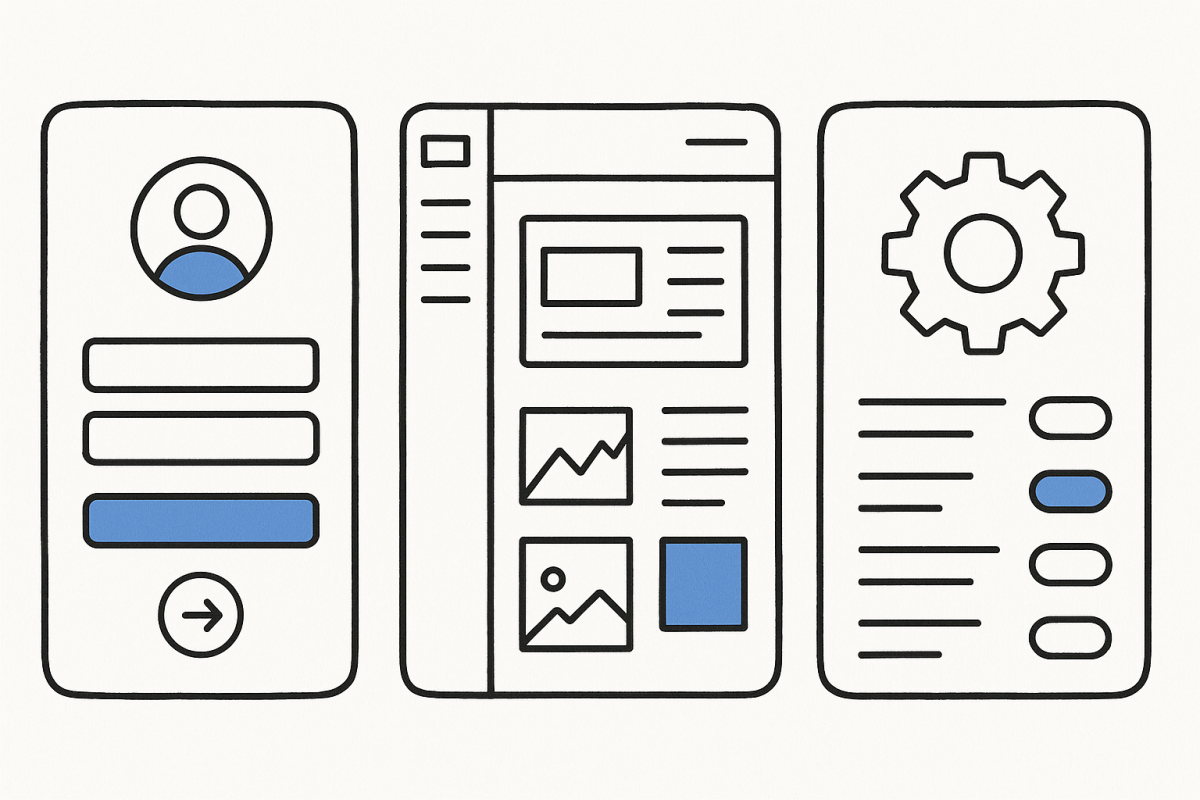
Pro Tip: If a feature takes more than two lines to explain, break it into smaller, testable slices. This usually cuts initial scope by 20 to 40 percent without losing learning value.
Choose the Right Build Approach Without In‑House Devs
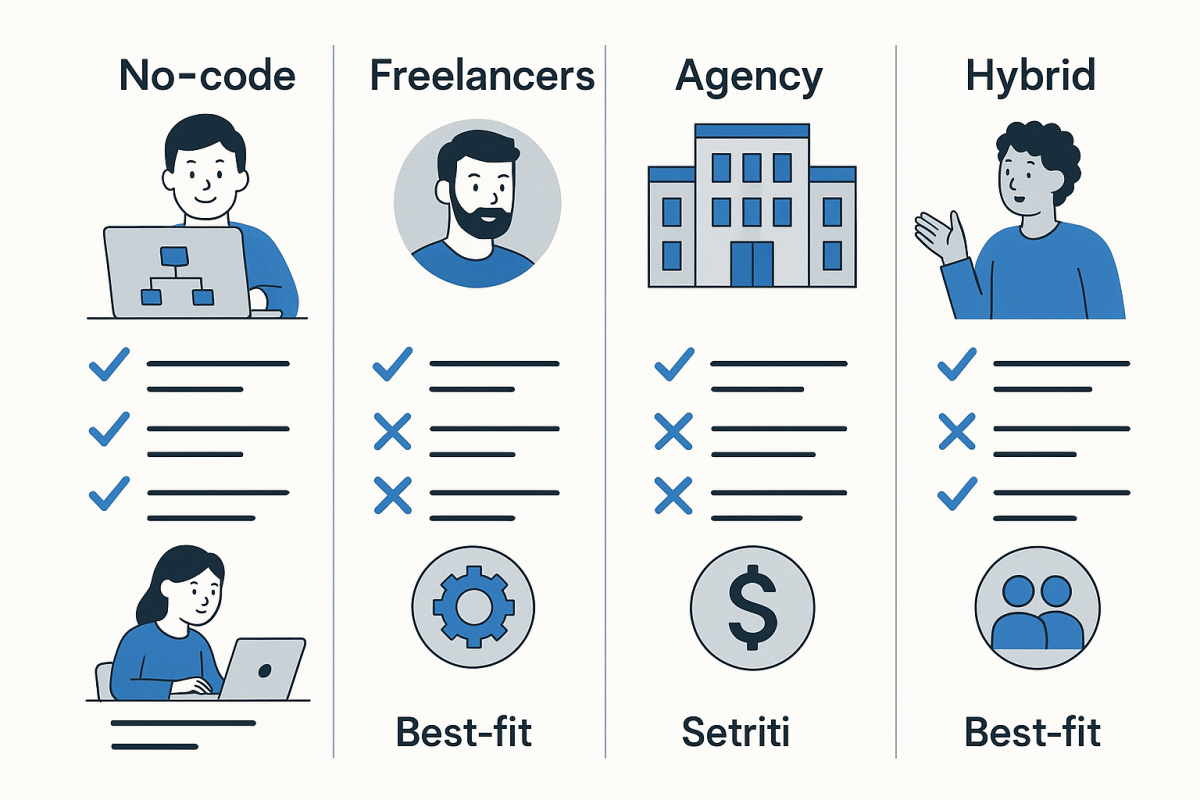
You have four main paths. Most non‑technical teams should combine at least two.
No‑Code / Low‑Code Tools
Best when:
You need to test workflows or consumer demand quickly, and you are comfortable with some constraints.
Examples: Bubble, Adalo, Glide, Webflow, Retool, or industry‑specific tools for Fintech dashboards and internal tools.
Strengths:
- Build in days, not months
- Cheap to experiment and iterate
- Non‑technical team members can modify flows and copy themselves
Limitations:
- Performance and scalability, especially for complex consumer apps
- Harder to customize edge cases or heavy integrations
- May require rebuild once product‑market fit is clear
Use it when the main risk is “will anyone use this at all,” not “can this scale to 1 million users.”
Freelance Developers and Small Studios
Best when:
You have limited budget, clear scope, and need custom logic or integrations.
Strengths:
- Flexible staffing and cost control
- Good for vertical MVPs, for example a tailored MVP for an eCommerce brand or a small Fintech product
- Can complement no‑code with custom components
Risks:
- Quality and reliability vary widely
- You become the de facto product manager and QA, which is time consuming
- Knowledge leaves when freelancers move on
Mitigate these risks with short, milestone‑based contracts and strong documentation requirements.
Specialized MVP / Product Agencies
Best when:
You have funding, want a partner that can handle product, design, and engineering, and you care about long‑term maintainability.
Strengths:
- Product thinking, not just coding
- Established processes for estimation, QA, and releases
- Dedicated teams that can carry you from MVP through early growth
This is where a partner like QloudSoft fits, especially for:
- Non‑technical founders who need end‑to‑end support
- Enterprises with stalled or failing software projects that need a reboot
- Marketing‑led teams that need ongoing product and engineering, not just one‑off builds
Hybrid: No‑Code First, Then Customization
A very effective pattern:
- Build initial MVP flows in no‑code to validate demand
- Bring in an agency or freelancers to harden key pieces, for example native mobile app, payment processing, or complex analytics
- Gradually replace fragile parts with custom code as metrics justify it
Key Takeaway: Your goal is not to pick the “perfect” stack, it is to pick the fastest safe path to real user feedback, given your risk, budget, and time constraints.
Turn Ideas into a Concrete, Buildable MVP Plan
Once you know your path, convert your concept into something developers can estimate and deliver.
Create a Lean Requirements Pack
At minimum, prepare:
- Product overview, 1 to 2 pages
- User personas and core jobs to be done
- Feature table with “Must / Should / Later” priorities
- 3 to 8 wireframes of key screens
- A simple flow diagram from signup to core action to outcome
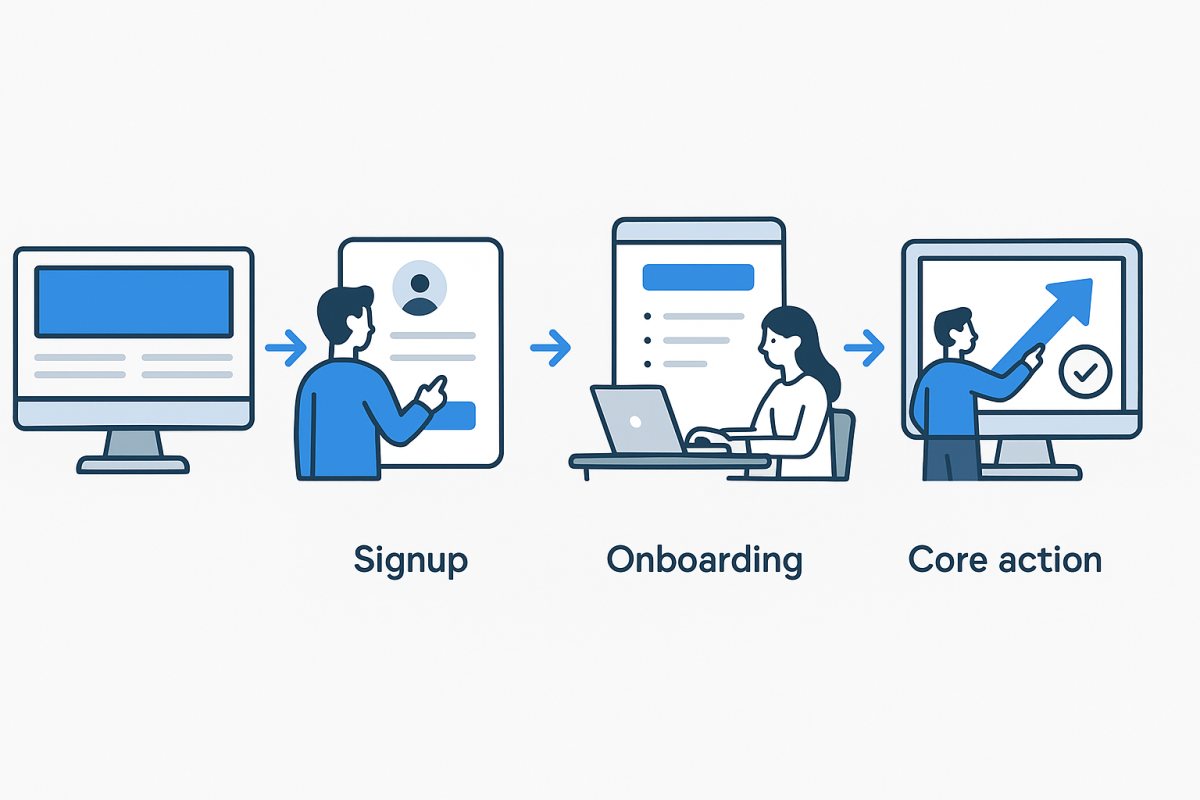
This pack lets external teams give realistic cost and timeline estimates without weeks of up‑front discovery.
Define a Thin Vertical Slice
Think of an MVP as a thin slice, not a wide shallow layer. The user should be able to:
- Discover the product
- Sign up
- Complete one valuable action
- See a clear result or outcome
Example for a Fintech reconciliation tool:
- Connect one payment provider, not all 6 you eventually want
- Reconcile payouts for one currency and one marketplace
- Export a simple summary report
Example for an eCommerce app:
- Support only Shopify initially
- Focus on one KPI, such as repeat purchase rate or AOV
- Limit to a single geographic region
Time‑Box and Budget‑Box the MVP
Decide before development:
- Maximum budget for the MVP, for example “$60k including design, infra, and contingency”
- Maximum time to first live users, for example “16 weeks from contract to beta”
Then work with your chosen partner to adjust scope to fit these boxes, not the other way around.
Important: If a vendor cannot explain what will be in and out of scope at your chosen budget and timeline, you do not have an MVP plan, you have a wish list.
Find, Vet, and Align External Development Partners
The biggest risk when building without in‑house developers is misalignment. You can reduce that risk dramatically with good vendor selection.
Where to Look
- Referrals from other founders and product leaders in your network
- Portfolios and case studies on agency sites, for example QloudSoft’s services and case studies
- Industry‑specific partners, for example Mobile App Developer Sydney for APAC‑based consumer apps
Avoid making decisions based purely on marketplaces or lowest hourly rate. Prior experience in your domain is worth real money.
How to Evaluate Shortlisted Partners
Ask for:
- 2 to 3 relevant case studies: ideally similar industry, complexity, or business model
- A walkthrough of their discovery and planning process
- A draft project plan for your MVP: milestones, deliverables, and team composition
- How they handle change requests, scope creep, and launch support
Compare vendors using a simple table:
| Criterion | Partner A | Partner B | Partner C |
|---|---|---|---|
| Relevant domain work | High | Medium | Low |
| Product strategy skill | High | Low | Medium |
| Communication clarity | High | Medium | High |
| MVP launch timeline | 12 weeks | 20 weeks | 16 weeks |
Align on Ownership, IP, and Handover
From day one, make sure:
- You own the code, designs, and infrastructure accounts
- The project uses a shared backlog in a tool such as Jira, Linear, or Trello
- Documentation is part of the definition of done, not a “nice to have”
Pro Tip: Ask explicitly: “If we stop working together at launch, what exactly will we have in our hands?” You want clear answers about repos, credentials, documentation, and deployment pipelines.
Manage the Build Without Being Technical
You do not need to read code to run a high quality MVP build. You do need structure, habits, and clear communication.
Set a Lightweight Governance Rhythm
Establish:
- Weekly check‑in call: demo of latest work, discussion of blockers, priority decisions
- Biweekly scope review: confirm what moves in or out based on discoveries
- Monthly milestone review: compare actual vs planned, adjust if needed
Keep meetings short and focused on decisions. Require live demos, not just status reports.
Use Simple, Visual Tracking
Insist on:
- A shared Kanban board: “To do / In progress / In review / Done”
- Tagged items by milestone or release
- Clear owners for each task
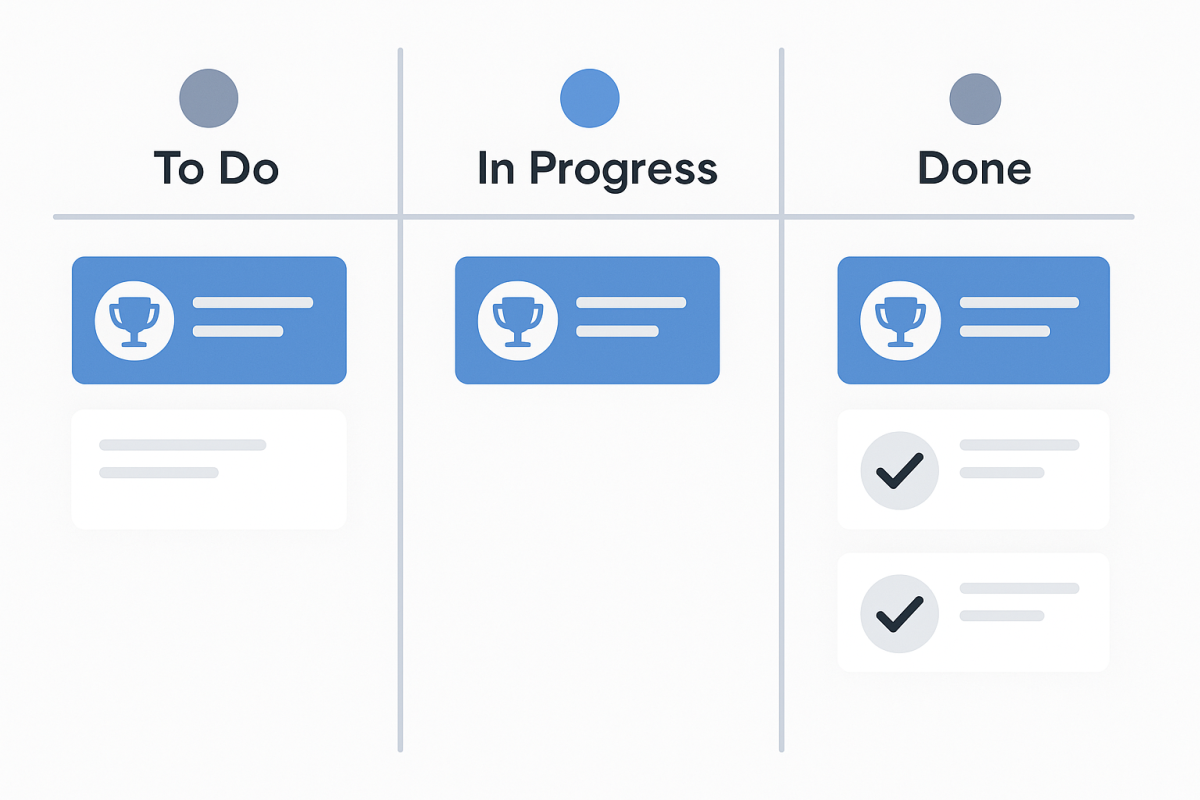
If a partner cannot explain what is in progress and what is blocked in a single screen, transparency is missing.
Make Quality a First‑Class Citizen
At MVP stage, you can accept some rough edges. You cannot accept broken core flows.
Require:
- Automated tests for critical flows, for example signup, checkout, payments
- Staging environment for you to test before each release
- Clear bug triage rules: what gets fixed immediately versus after launch
Encourage early user testing. Even 5 to 10 external testers will reveal issues faster than any internal review.
Key Takeaway: Your main job is to protect the core experience from scope creep and distractions. Every “nice to have” delays your first learning.
When To Shift From MVP to Long‑Term Product
You built and launched your MVP without in‑house developers. Now what?
Define Evidence That Justifies Further Investment
Before rebuilding or scaling, look for hard signals:
- Consistent active usage from target users
- Willingness to pay, or strong leading indicators such as increased AOV or reduced churn
- Organic referrals or strong product feedback indicating clear value
For Fintech or eCommerce tools, this often means measurable improvements such as “reconciliation time cut from 6 hours to 45 minutes” or “repeat purchase rate up 10 percent in cohort tests.”
Decide on Your Long‑Term Team Model
Options:
- Keep working with the external partner and gradually bring a product owner or technical lead in‑house
- Hire your first in‑house engineer or mobile specialist, possibly in collaboration with a local partner such as a Mobile App Developer in Sydney
- Split responsibilities: keep infrastructure and architecture with an agency, internalize feature experimentation and growth work
There is no single right answer. The pattern that works best is the one that:
- Preserves momentum
- Protects code quality and knowledge
- Fits your runway and hiring market
How QloudSoft Can Help You Ship an MVP Without In‑House Devs
If you want a partner that understands both product and engineering, QloudSoft specializes in helping:
- Funded startups with no internal developers
- Growth‑stage eCommerce and Fintech brands exploring new products
- Enterprises with stalled or failing projects that need to be rebooted as lean MVPs
Typical support includes:
- Clarifying and scoping your MVP in a few structured workshops
- Designing and building web or mobile MVPs, from prototype to launch
- Ongoing iteration sprints based on real usage data
You stay focused on customers, market, and strategy. QloudSoft handles the architecture, delivery, and technical risk.
To see how this could work for your specific idea or product line, visit QloudSoft and explore their services.
Call‑to‑action: Learn more about how QloudSoft structures MVP engagements so you can launch faster without building an in‑house team prematurely.
Summary: Your Playbook for Building an MVP Without In‑House Developers
- Start with a narrow, learning‑driven MVP definition and simple artifacts
- Pick a build approach that matches your risk, budget, and timeline, not trends
- Prepare a lean but concrete requirements pack and a thin vertical slice
- Vet partners on domain fit, product thinking, and transparency, not just hourly rates
- Run a clear governance rhythm so you can steer quality and scope without writing code
- Use MVP results to decide if and when to build an in‑house engineering capability
If you follow this structure, you can move from idea to live product in weeks or a few months, even with zero internal developers.
Frequently Asked Questions
How much should I budget to build an MVP without in‑house developers?
For a typical B2C or SMB SaaS MVP, budgets often range from $30k to $150k, depending on complexity, design requirements, and integrations. No‑code MVPs can be validated in the lower part of that range. Custom native mobile or complex Fintech projects sit at the higher end. The most important step is to fix a maximum budget and time frame, then work with your partner to adjust scope so your MVP stays within those constraints.
How long does it usually take to launch an MVP with an external team?
A focused MVP usually takes 8 to 16 weeks from signed contract to live beta users. Simple no‑code prototypes can ship in under 4 weeks. Complex products, such as regulated Fintech tools or multi‑tenant eCommerce platforms, may push towards 20 weeks. The key drivers are clarity of scope, speed of decisions on your side, and whether the partner already has experience in your domain and tech stack.
Can a no‑code MVP really handle paying users and production traffic?
Yes, for many early‑stage use cases. No‑code tools can handle hundreds or sometimes thousands of users if the product is not computation‑heavy. They are well suited for early experiments, internal tools, or narrow workflows. However, if your MVP requires custom security models, advanced performance, or complex mobile experiences, you should treat no‑code as a learning tool and plan for a gradual transition to custom code if traction appears.
How do I avoid being locked in to a particular agency or freelancer?
From the start, require that code is stored in repositories you own, such as your GitHub or GitLab. Ensure all cloud accounts and third‑party services are under your organization. Add documentation and handover materials to the scope of work. Ask for a short, structured handover phase at the end of the MVP project. These steps mean you can change partners or hire in‑house later without losing control of the product.
When should I start hiring in‑house developers after launching an MVP?
Treat hiring in‑house developers as an investment triggered by evidence. Once your MVP shows consistent user engagement, clear willingness to pay, and a growing roadmap of validated opportunities, it makes sense to bring at least one senior engineer or technical lead in‑house. For many teams, this happens 6 to 18 months after the first MVP launch, once product‑market fit feels within reach and you can justify the ongoing fixed cost of an internal team.
About Post Author