Outsourced product development for non technical founders
Why outsourced product development matters for non technical founders
If you are a non technical founder, you probably face a simple problem: you have a strong vision for a product, but no in-house team or coding background to build it. Hiring a full internal team is slow and expensive, while freelancers can be risky and inconsistent.
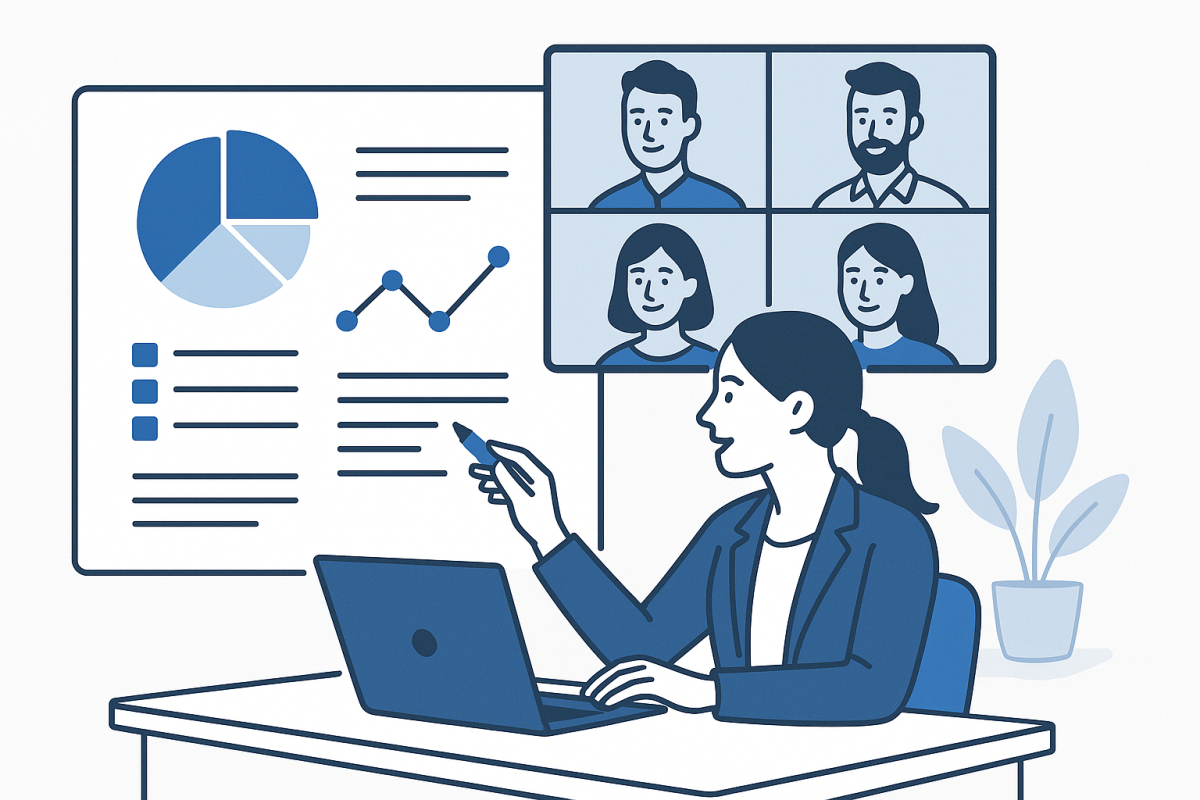
Outsourced product development is a structured way to solve this. Instead of hiring full-time engineers, designers, and product managers, you partner with a specialist company that handles strategy, design, development, and iteration. Done correctly, this gives you a virtual product team that you can steer without needing to write a single line of code.
This guide explains what outsourced product development really involves for non technical founders, when it makes sense, how to choose the right partner, and how to manage the relationship so you ship a product that customers actually use and pay for.
Key Takeaway: Outsourced product development is not “cheap coding.” It is a way to rent an experienced product organization that you direct with your business vision.
What outsourced product development actually is
Outsourced product development means delegating all or part of your product lifecycle to an external team that already has the skills and processes you lack internally.
Typical responsibilities that can be outsourced:
- Product discovery and requirements
- UX and UI design
- Technical architecture and development
- Testing and quality assurance
- Launch support and ongoing maintenance
For non technical founders, the most important shift is this: you own the problem and the outcomes, while your partner owns how the solution is built.
Core components of an outsourced product team
A mature provider usually brings:
- Product or project manager, who acts as your primary interface and translates your business goals into delivery tasks.
- UX / UI designer, who turns your ideas into prototypes and clickable interfaces.
- Developers, such as Web Development, Ios Development, or Android Development specialists.
- QA engineer, who ensures your product works reliably on real devices and environments.
- DevOps or infrastructure support, who manages deployments, environments, and basic monitoring.
What you, the non technical founder, still own
You cannot outsource ownership of the problem or the customer. You remain responsible for:
- Vision and business model
- Prioritizing which features matter now versus later
- Defining success metrics
- Providing fast feedback and decisions
Pro Tip: If a vendor tells you they can “take it from here” with minimal founder involvement, consider that a red flag. You want a thinking partner, not an autopilot vendor.
When outsourcing is the right move for non technical founders
Outsourcing is not always the answer. There are clear scenarios where it is a strong strategic fit, and cases where it can cause problems.
Situations where outsourced development works best
You are likely a good fit if:
-
You need to validate an idea quickly
For example, you want to test if customers will pay for a booking app within 4 months instead of spending a year hiring a team. -
Your budget is constrained but focused
You can afford a well-scoped project, but not a full-time CTO, designer, and engineering team on payroll. -
You lack technical leadership
You do not have a cofounder who can architect systems or manage developers. A seasoned partner can fill this gap initially. -
You expect evolving requirements
You plan to change direction based on user feedback. Outsourcing with an agile process lets you adjust the roadmap without re-hiring.
When you should be cautious about outsourcing
Outsourcing may not be ideal if:
-
Your product is deeply core to proprietary tech
For example, advanced AI algorithms or complex fintech infrastructure may require internal, long-term ownership of code and knowledge. -
You want an entirely hands-off experience
Outsourcing is still work. You need to respond to questions, clarify priorities, and engage in weekly reviews. -
Your budget is extremely low
If you are looking for “the cheapest possible build,” you will likely get low quality that is expensive to fix later.
How to choose the right outsourced product development partner
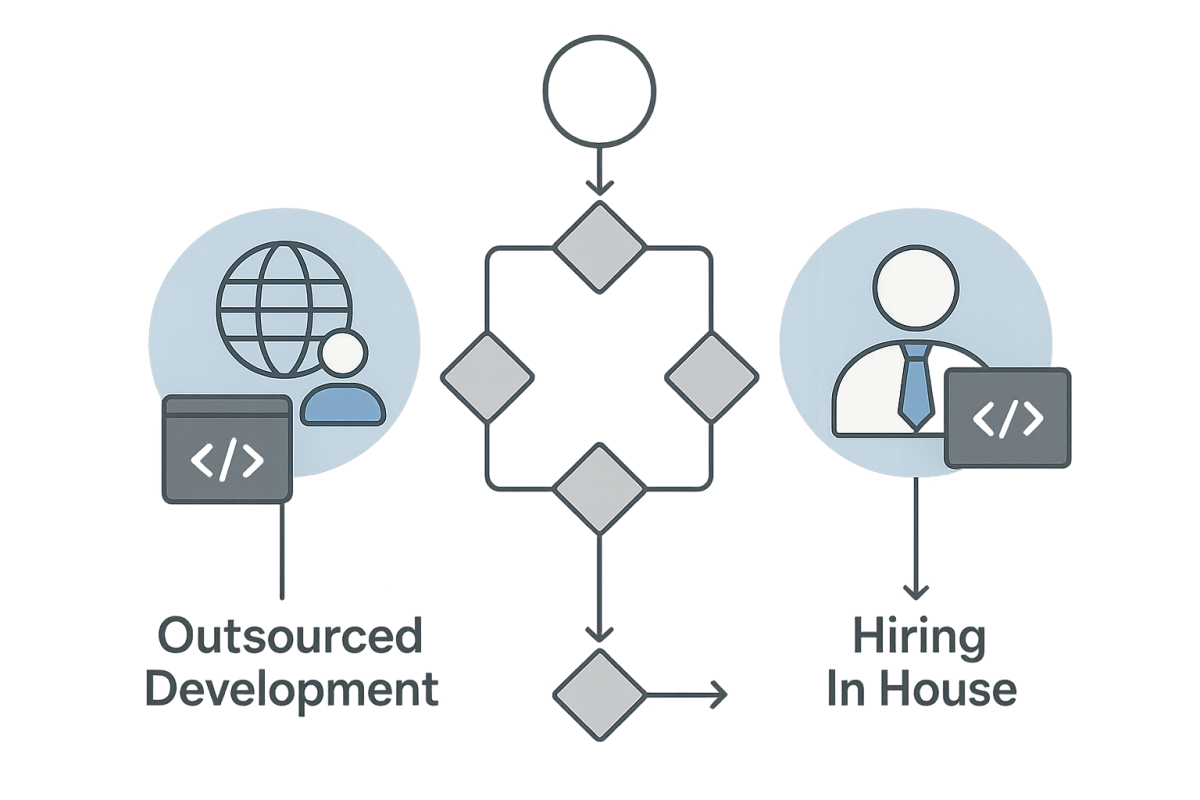
The most common mistake non technical founders make is choosing based only on hourly rate or a flashy website. You are effectively hiring an external product organization, so you need to evaluate them like a strategic partner.
What to look for in a partner
Use the following comparison table during vendor evaluations:
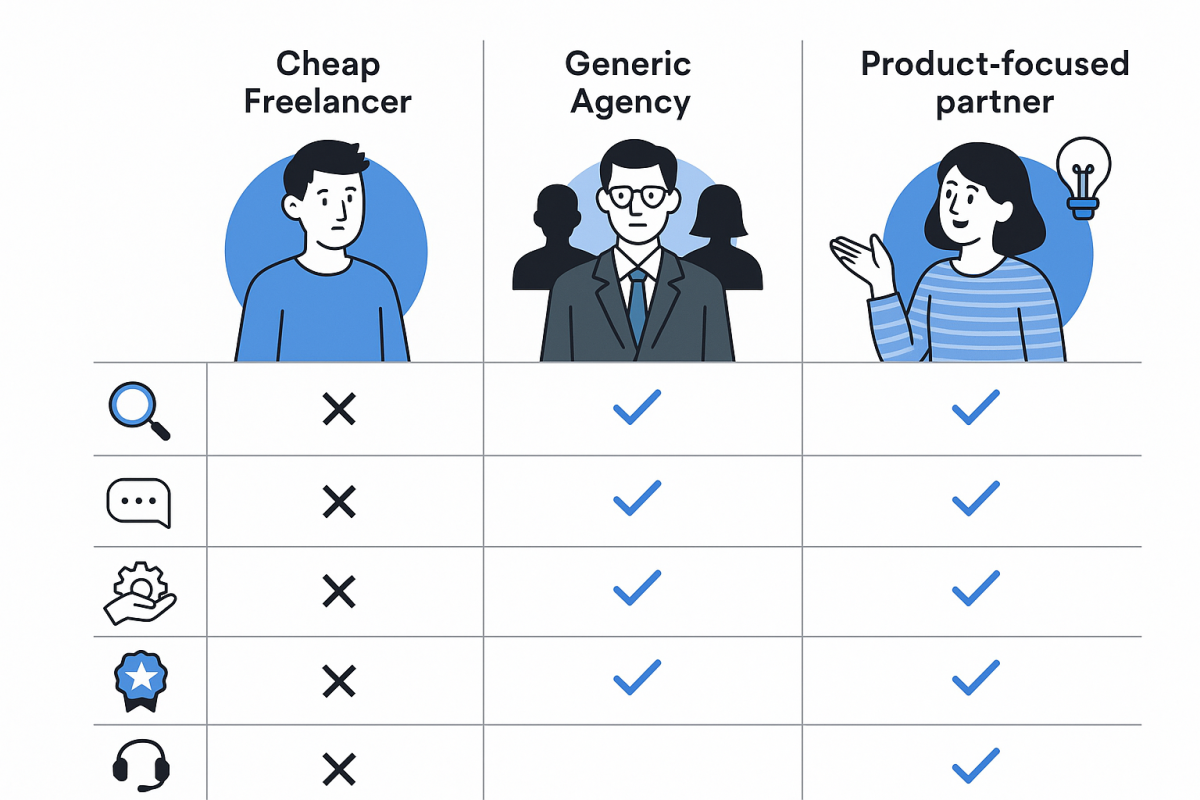
| Evaluation Area | What Good Looks Like | Red Flags |
|---|---|---|
| Discovery process | Asks hard questions, challenges assumptions, proposes lean MVP | Immediately says “yes” to every feature |
| Similar projects | Has shipped SaaS, marketplaces, or mobile apps similar to yours | Only has brochure sites or unrelated work |
| Communication | Offers weekly calls, clear channels, English proficiency | Slow replies, unclear answers, no structured updates |
| Product thinking | Talks about user journeys, retention, metrics, and iteration | Only talks about “features” and tech stack |
| Technical flexibility | Can handle web, iOS, and Android where needed, and explain tradeoffs clearly | Pushes a single tech choice without context |
| Contract and IP | Clear ownership of code and designs, documented handover, transparent pricing | Vague IP terms, unclear on what you own at the end |
Questions non technical founders should ask
Ask these in your first or second conversation:
- “Walk me through how you turned a founder’s idea into a shipped product.”
- “Who exactly will be on my team and how do I interact with them day to day?”
- “How do you handle changes in requirements after we start?”
- “What is a realistic MVP timeline and budget range for a product like mine?”
- “Can you show examples of Ios Development, Android Development, or Web Development you have done that are similar to my needs?”
Important: Insist on speaking with the actual delivery lead or project manager who would run your project, not just a salesperson.
Structuring your outsourced product engagement for success
Even a great partner needs structure. As a non technical founder, setting up the right engagement model protects your budget and increases your chances of shipping something viable.
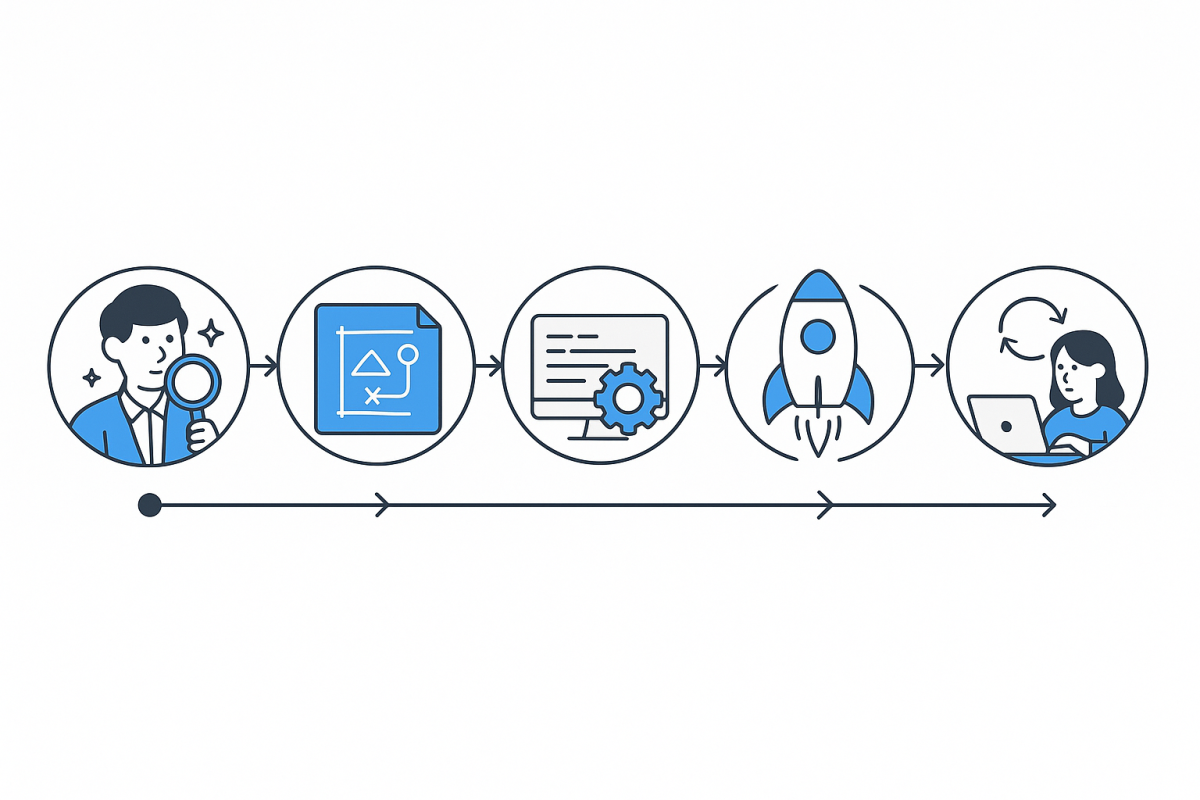
Start with a discovery and scoping phase
Before anyone writes code, invest in a short, focused discovery phase. Typical outputs:
- Clear problem statement and target user personas
- Prioritized feature list (must-have vs nice-to-have)
- Low or mid-fidelity wireframes
- Rough technical architecture and platform choice (web, mobile, or both)
- Timelines and budget estimates for an MVP
This phase is usually 2 to 4 weeks and can save months of rework.
Choose the right collaboration model
Common models:
-
Fixed scope, fixed price
Best when requirements are very clear and stable. Risk: inflexible to change. -
Time and materials with a capped budget
Good for evolving products. You pay for time, but agree on a maximum spend and adjust scope as you learn. -
Dedicated team
A full or partial team works only on your product, often long term. Best if you already have traction and a roadmap.
For most non technical founders building their first version, a discovery phase followed by a capped time-and-materials model is a balanced choice.
Define communication and decision rhythms
At minimum:
- Weekly or twice-weekly status calls with your project lead
- Shared tools for backlog and tasks (Jira, Trello, or similar)
- A single decision owner on your side, usually you, to avoid delays
- Monthly review of scope, budget, and priorities
Managing product quality when you cannot read code
You do not need to be technical to manage quality effectively. You do, however, need structured checkpoints and clear testing behaviors.
Focus on behavior and user outcomes, not code details
Instead of asking “Is the code good?”, ask:
- “Can a new user complete sign-up and first key action in under X minutes?”
- “Does the app feel fast and responsive on mid-range devices?”
- “Are errors handled gracefully, with clear messages to the user?”
Create acceptance criteria for major features using simple language. For example:
- “User can register using email and password, receive a confirmation email within 1 minute, and log in successfully after confirmation.”
Use staging environments and regular demos
Insist on:
- A staging environment where new changes are deployed before going live
- Fortnightly or weekly demo sessions where the team walks you through what is new
- Access to build artifacts and test links, especially for mobile apps
Key Takeaway: As a non technical founder, you validate behavior, usability, and alignment with business goals. Your partner takes care of implementation details, testing methods, and performance benchmarks.
Bring in occasional external review if needed
If budget permits, consider:
- A part-time technical advisor or fractional CTO to review architecture and critical decisions.
- Third-party security or performance audits for sensitive apps, such as fintech or health.
This gives you extra confidence without building a full in-house team.
Planning for mobile, web, and multi-platform from day one
Many non technical founders underestimate platform decisions. Choosing where to launch first has huge implications for cost, timeline, and user adoption.
Decide your first platform strategically
Ask:
-
Where are my users most likely to engage first?
For B2B internal tools, start with Web Development. For consumer-facing services that rely on notifications and location, start with Android Development and/or Ios Development. -
What is the smallest platform choice that still lets me validate my core assumptions?
For many products, a responsive web app is enough for the first 100 to 500 users.
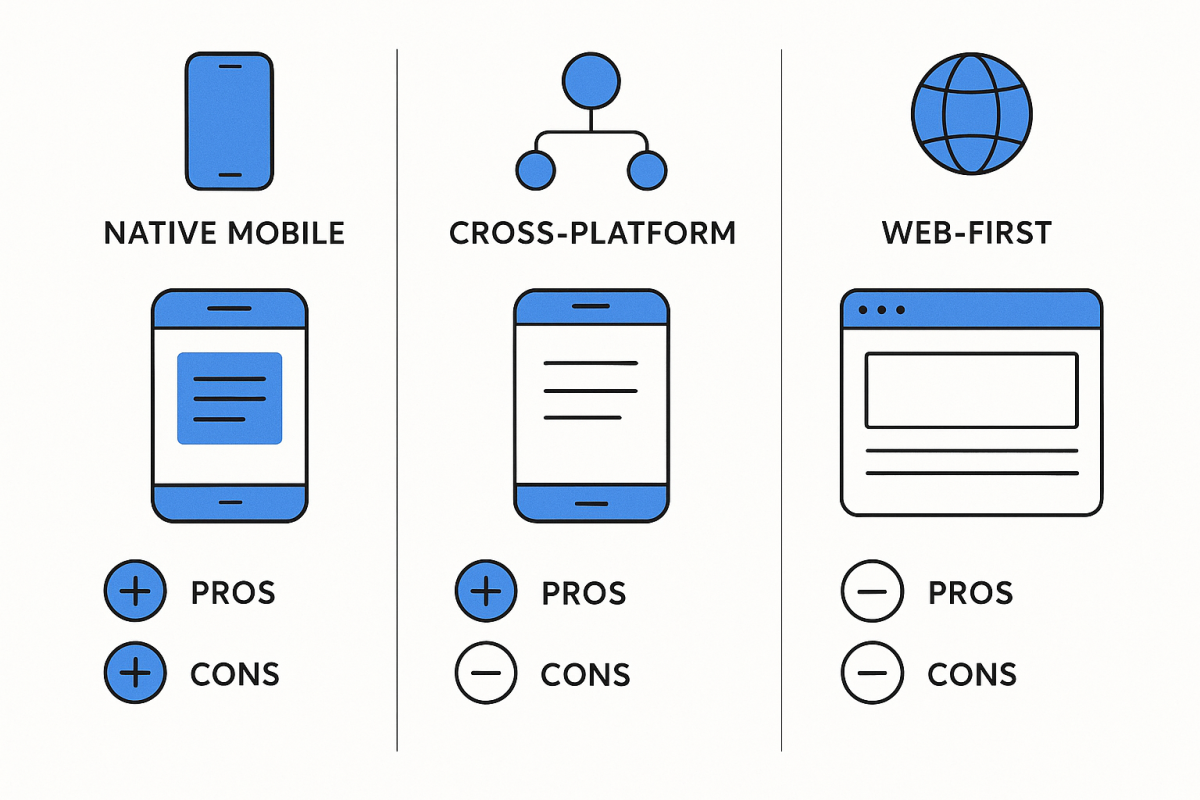
Native vs cross-platform for non technical founders
Discuss these options with your partner:
| Approach | Good For | Tradeoffs |
|---|---|---|
| Native iOS / Android | Apps that rely on device features or top-tier UX | Higher cost, separate codebases for each platform |
| Cross-platform (e.g., Flutter, React Native) | Startups needing both iOS and Android quickly | Faster time to market, but may need native modules for some features |
| Web-first (responsive) | Early validation, internal tools, B2B dashboards | Limited offline support, app-store presence comes later |
How QloudSoft supports non technical founders specifically
You need a partner that understands both product strategy and the realities of outsourcing for non technical leaders. This is where QloudSoft can be useful.
QloudSoft provides:
- End-to-end product teams that cover discovery, UX, Web Development, Ios Development, Android Development, QA, and launch.
- A discovery-first approach that helps you define a realistic MVP, roadmap, and budget before full-scale development.
- Clear communication patterns tailored for non technical founders, including visual prototypes, plain-language status updates, and demo-driven reviews.
- Post-launch support so your first version does not become “abandonware” and can evolve with user feedback.
Pro Tip: If you are unsure where to start, use a low-cost discovery engagement to clarify your product and estimate your MVP realistically before committing a full budget.
To see how QloudSoft structures outsourced product development and to review relevant case studies, visit QloudSoft and Learn more.
Your next steps as a non technical founder
If you are considering outsourced product development, take these practical steps:
- Write a one-page product brief that explains your target users, problem, and the smallest set of features you believe matter.
- Shortlist 2 to 4 product-focused partners and run structured discovery calls using the questions above.
- Start with a contained discovery and scoping phase to reduce risk.
- Agree on communication cadence and acceptance criteria before coding begins.
- Plan a realistic MVP launch, then commit to at least one to two cycles of post-launch iteration.
With the right partner and structure, outsourced product development can turn your non technical background into an advantage. You stay focused on customers and business, while specialists handle the technical execution.
Frequently Asked Questions
What is outsourced product development for non technical founders?
Outsourced product development means hiring an external team to handle design, development, and launch of your software product. As a non technical founder, you provide the vision, business goals, and decisions about priorities, while the partner manages technical details, delivery process, and quality. This lets you move faster than building an in-house team, while still shipping a professional-grade web or mobile product.
How much should a non technical founder budget for an outsourced MVP?
Budgets vary widely, but for a serious, production-ready MVP you should expect at least a mid five-figure to low six-figure investment, depending on complexity and platforms. Simple web apps can land at the lower end, while multi-platform mobile products cost more. A short discovery phase is the best way to get a realistic estimate, since it aligns scope with your budget and helps avoid expensive surprises later.
How can I avoid being “scammed” by a development agency?
Reduce risk by doing structured vetting. Check real case studies, talk to past clients, and insist on a clear discovery process. Make sure contracts specify IP ownership, deliverables, communication cadence, and how changes in scope are handled. Avoid partners that promise a fixed low price without understanding your product, or who resist transparency about who will actually work on your project day to day.
Should I hire a CTO before or after outsourcing development?
If you are early and pre-traction, it is often more realistic to work with an experienced outsourced partner first and bring in a part-time technical advisor if needed. A full-time CTO makes sense once you have traction, complexity, or funding that justify building an internal team. Outsourcing can bridge the gap and validate your product idea before you commit to a senior permanent technical hire.
How involved do I need to be if I outsource product development?
You should expect to be actively involved, especially during discovery, prioritization, and feedback. Plan for weekly or twice-weekly meetings, regular reviews of prototypes and demos, and fast responses to questions. You do not need to manage technical details, but you do need to own decisions about features, tradeoffs, and what success looks like for your customers and business.
About Post Author